Categories

Showing posts with label Social Interactions culture identities and traditions. Show all posts

Saturday, 24 January 2015

Yennayer Amazigh 2965


Assegas Amegaz,

Happy new year to all the Amazighs/Berbers in the world. We are now in year 2965.
This year we had a Kabyle ( a Berber tribe residing in North central Algeria ) traditional dish called: Asvan. Some other Kabyle regions call it Tikerbabine. It's samolina based hand rolled balls, simmered in light red sauce.
The sauce consists of veggies, such as, tomatoes, carrots, courgettes, radish and green beans, as well as some legumes, such as, chick peas, black eyed peas. I added chicken, cause the tradition to celebrate Yennayer is to have chicken for lunch or dinner.

Yennayer is the first month of the Berber year.
Yen = the first / number 1
Ayyer = month / moon.

We celebrate it every  12th January by making special lunch or dinner. Other regions bring a huge wooden round container and fill it with all sorts of nuts and sweets and sit their babies in it, or shower their kids with all those treats. In other Berber countries Yennayer involved more treats such as Tasmina (a samolina based dessert mixed with butter and honey), special dishes such as Rechta (this looks like noodles, eaten with a broth made with chicken stock, radish, courgettes and chicken.

I had the intention to make Rechta this year.. I got the machine and all ( offered to me by Gingerbeard) but I couldn't bring myself to doing it last minute I had a change of heart.

Pedro and Kiki (our furry adopted kids) enjoyed some Yennayer chicken. I sent Asvan some to my bestie who's from West Algeria and who had never tasted it before that time. In their city they celebrate Yennayer by preparing what they call Cherchem. (a mixture of many legumes steamed and added together in a thick sauce) So, she said Asvan tasted delish and that she's welcome another plate anytime soon. bless


Friday, 31 October 2014

Eid Al-Adh'a 2014 - part2

____________________________

We spent Eid's afternoon chillaxing at our friend's. We had green tea with mint, served in a gorgeous west Algerian tea pot. It was very traditional. Tifa made Makrout and tcharak and decorated the table with cute little plates fulls of nuts.

The tea helped our bloated bellies feel better. It is said to burn fat. So that was good. Alhamdulillah.


I made Mimoza a new pink cardigan for Eid. She put on her beautiful white floral dress and the crocheted cardigan. Here is an Eid card to wish everybody a blessed and a happy day. Amen.

May God accept our good intentions and sacrifice and may he forgive our mistakes and sins.
Our hearts were fully with the suffering people in the world, who may not have had the chance to have a joyful Eid day. We prayed and pray for them to have brighter days in the future. Amen. 

keep well. 

Eid Al-Ad'ha 2014

Eid Mubarak, Amen
Eid Al-Adha this year was different. Alhamdulillah.
We got to sacrifice a Somali sheep for God's sake, walking upon the steps of our beloved prophet Abraham who was ordered to sacrifice his son Ismaeel. As he was about to carry out God's command, he was surprised to see a sheep next to him. A sign from God's mercy to sacrifice instead.

We went to a Farm in Sanabis, where the local people had many beautiful cows and horses. There were chicken and goats, too. The sheep roams about aimlessly as we took smelling the cattle's poop and waving flies away from our faces. Our friend had helped us buy the sheep before we headed with him to the farm.
Mr Somali posing 
 Our friend did us the honour of sacrificing our sheep. The men workers then cut up all up and gave us the meat. I also asked for a small piece of skin to keep as a souvenir. I did what we Algerian do with sheep skin. I rubbed it with salt and left it to dry for many days.

We noticed that the Arab sheep were more expensive than the Somali ones though the latter were born and bred locally. The Arab sheep cost double, and most people were more keen on buying them.

The meat was a little too greasy. Gingerbeard and I spent a while trying to cut fat from meat and separating the pieces into bags to give away. We struggled a lot finding good sharp knives, but it was the first experience and we surely learnt a lot from it.


For lunch, we took some liver, lungs and some chopped meat and went to our friend's. We had a BBQ on the roof of the building. The weather was amazing alhamdulillah for everything. The kids played and enjoyed themselves. 


on the left is the grilled liver cut into pieces. It was delicious. On the second plate were some pieces of liver and bell pepper. And on the third one, my friend Tifa made some bbq skewers with some meat wrapped in small sheets of fat. I didn't dare try one. but she seemed to have enjoyed them. That's how they do them in her city - West Algeria. 


The kids didn't eat much. They were busy being naughty and getting their clothes soaked with water from the pool. They drove their parents nuts. 


Salad consisted of green leaves, tomatoes and a dressing of lemon and vinegar. 


On the second day, there was still some liver lungs and meat left. So Tifa made Bakbouka with potatoes in a form of a stew. It consisted of lungs, liver and kidneys cut into small pieces and simmered in a nice red stew. It was full of flavour. She had brought lots of spices from Algeria. It was the first time Gingerbeard and I tasted it. We didn't like the lung and kidney pieces and God we LOVED the sauce.


Our friend also prepared home made Algerian bread (matloa), bless her sweet heart.
We made more green salad and she and I had fried sheep testicles. Gingerbeard's face was priceless. He got grossed off.

Chickpeas swimming comfortably in the delectable dish. 


 More home made bread. kept coming out of the bags. we couldn't stop asking for it. It tasted amazing. Alhamdulillah


Meanwhile Tifa's hubby was busy grilling the BBQ skewers. and kids ate a little more this time.


Saturday, 18 January 2014

Yennayer 2964 - Berber Amazigh Calendar Asseggas Ameggaz


Asseggas Ameggaz 


Here we are, the new Amazigh/ Berber new year 2964 is finally here. It was heart-warming to see lots of Imazighen (Berbers) traditionally celebrating their new year accross Noth Africa, Europe and all over the world.
It comes on 12th of January. Our first month of the year is called: Yennayer. This is a Berber compound word, that consists of two parts: 

Saturday, 10 August 2013

Wake up Algiers! It's Eid !!


Read: Saha l'idh nwen (Tamazight- Tifinagh alphabet)
Meaning: May your Eid be healthy and blessed. 

What's an Algerian Eid like? 

Friday, 9 August 2013

Eid gifts


Time really flies.... 


Ramadan this year went by so quickly, May God accept our repentance, good and deeds and may He forgive our mistakes and guide us to what's best for us.

Friday, 2 August 2013

My 2013 Ramadan table. (with an insight into a typical Algiers table.)

Some DYI decoration for Ramadan. 


Traditionally, in the city where I come from (Algies) Ramadan table is full of different kinds of food. The dishes usually consist of, but not limited to: 

Wednesday, 17 July 2013

Weddings in Algiers

No matter how much I said about Algeria, I couldn't possibly give it all the credit it deserved. It is a country with a huge number of diverse customs and social habits (ah and superstitions, too). In this entry, I’ll be talking about how weddings are organised in Algiers, specifically. Even so, within Algiers, there is more than one way of holding wedding parties. Therefore, and to be fair, I’ll, exclusively, describe how things are done in the part of Algiers I come from, . 

Thursday, 4 July 2013

Dollz - part 2


These pictures reflect a number of traditional aspects, such as clothes, the decoration of houses indoors, the bridal Henna, boys circumcision, afternoon tea/coffee, El-Hemmam, Zawya and much more.
You'll also see various tools old tool (well, not that old, people still use them in the villages, moutains, the desert and many places outside the major cities). These tool involve, Shekwa, Qerdash, Loh, Siyyar, Lhafsa, Thashmoukhth, Azetta, Tajin, and much more.
My henna basket made by Hajira 

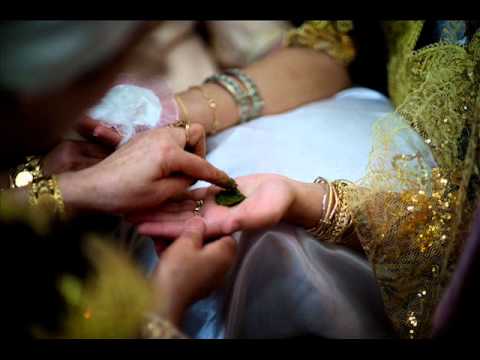
The bridal Henna: it is a tradition in many -but not all cities- to have an evening or an afternoon to put Henna on the bride's hands and feet before her big wedding day. Family women, old and young, get together to share this moment of joy in the family. the grannies sit around the bride and sing. They sometimes beat the drum too. The dry henna is presented in decorated basket that consists of decorated eggs, candles, cotton pads or handkerchiefs to cover the henna once applied on the wife-to-be hand's.  The 'head granny' sits at the brides knees, sings along and stir the Henna mix, put in copper pot, with her thumb. When the mixture is ready, she applies some on the bride's palm, forming a circle filled with Henna paste. 


Boys circumcision: The Muslim families in Algeria circumcise their boys between the age of 1 month and 5 years old. Usually a great party is organised to celebrate the event. ladies perform the Yuyus ( a traditional "scream" if i can call it so?) special sets of blankets, napkins, bed sheets, table clothes, pillow cases and other linen pieces cover the room. The boy wears tradtional clothes, including a hat, long gown and cape and pointy soft embroidered slippers. He, then, gets taken to the doctor's to be circumcised and then brought back home and put to lie down on those new sets of linen. All family members shower the boy with money - even the neighbours get in the house to congratulate him and wish him the best. Nowadays, many families, in the major cities, organise big parties with DJ's or musical bands and invite people to have coffee.

Sunday, 30 June 2013

A Moroccan table

Again, and as I mentioned in previous posts, food always has this “magical and beautiful way of bringing people together”

This time we are in the house of a Moroccan couple.

About the guests and food. 
A Modern version of the Amazigh Tajin. 

The wife invited me and a lovely Pakistani middle aged woman, who brought along 4 of her daughters, for lunch at hers. She had already prepared most of the dishes the night before. So we -the guests-  didn’t really contribute much in the food making. We enjoyed watching her fix the last dish – Tajin –  which was meant to be served hot straight from the stove, though.


Wednesday, 26 June 2013

A different Ramadan table.

As Ramadan approaches I can’t help but think about the previous Ramadans, spent in different places on the globe.

What benefit have I gained from it? What shouldn’t I have done? What should I have done instead? Self evaluation is pretty crucial to me. I try to learn from the past as much as I can.

Ramadan 2012 was the first month I’ve ever spent with a family other than my own (i.e. my family-in-law). It was a new experience for me; one that I had never thought about or even imagined in the past.

North African/Amazigh Tattoos.

I drew this in order to give an idea about where
some tattoos are done and what they look like. 
Tishraat (Lewshem, Harquus) are words used to describe the different patterns tattooed on the Face, the neck, the back of hands and knuckles, wrists, forearms, feet and knees by the Berber women in North Africa. These patterns come in specific shapes, such as, diamond ones, squares, thin zigzagged lines, dots, triangles and crosses. They can also form shapes of the local jewellery designs.

These Tattoos are an ancient tradition. The native North African Berber ladies (the original inhabitants of the Canary Islands, Morocco, Algeria, Tunisia, Lybia, Siwa Oasis in Egypt, North Mali, Chad, Mauritania and the western Sahara) have them done for various motives.
Some of these reasons are:
  • To beautify themselves. 
  • To indicate their pride in belonging to a particular tribe. 
  • To indicate the marital status of the lady or the number of children she has got.